Why Fans Fail at the Worst Possible Time
There’s an unwritten law in commercial kitchens: extraction fans always seem to fail during the busiest service of the week. Friday night, fully booked, and suddenly your kitchen is filling with smoke and your staff are working in unbearable heat.
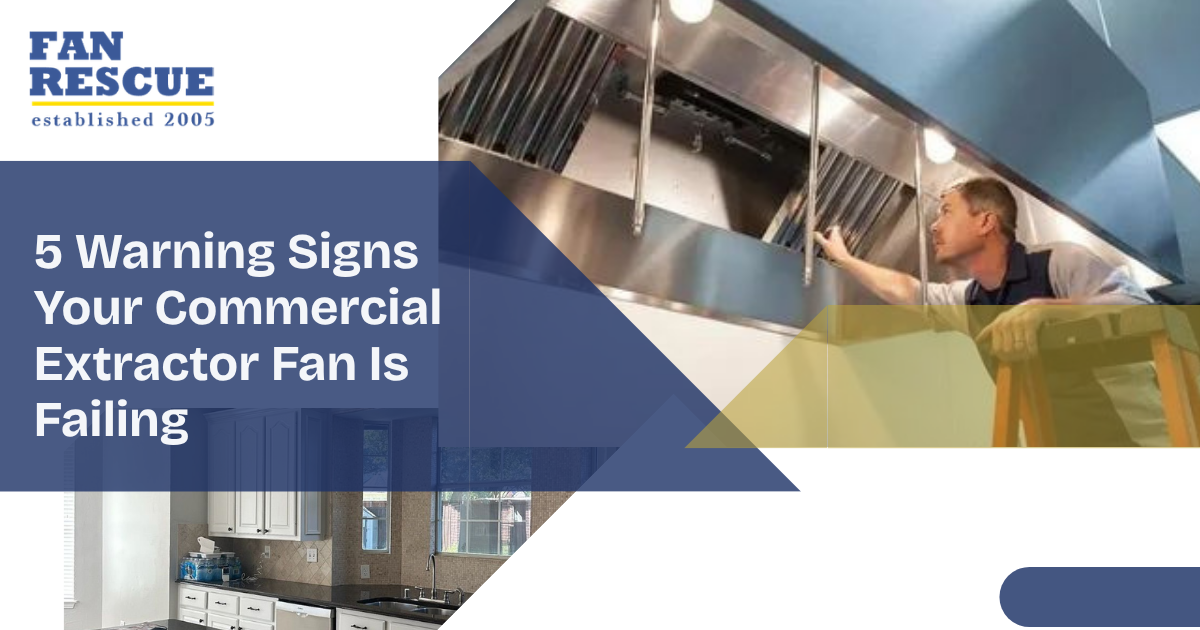
The truth is, fans rarely fail without warning. In almost every emergency callout we attend, the warning signs were there for weeks or even months before the final failure. Learning to recognise these signs – and acting on them – can mean the difference between a planned repair during quiet hours and an emergency shutdown during peak service.
Warning Sign 1: Unusual Noises
A healthy extraction fan produces a consistent, relatively quiet hum. When you start hearing new noises, pay attention.
Grinding or scraping sounds often indicate bearing failure. The bearings support the fan shaft and allow it to rotate smoothly. When they wear, metal-on-metal contact creates grinding noises that worsen over time. Caught early, bearing replacement is straightforward. Left too long, the shaft can be damaged, requiring more extensive repairs.
Rattling or vibrating sounds usually point to loose components, an unbalanced fan wheel, or mounting issues. While less immediately critical than bearing problems, they indicate that something isn’t right and will likely worsen.
Squealing or screeching typically comes from belt-driven systems where the belt is worn, loose, or misaligned. Belt failure stops the fan entirely.
Warning Sign 2: Reduced Performance
If your kitchen seems hotter than usual, smoke lingers longer, or odours aren’t being cleared effectively, your extraction system isn’t performing as it should. This could indicate fan motor losing power, blocked filters restricting airflow, grease accumulation in ductwork increasing resistance, or duct leakage reducing system effectiveness.
Reduced performance means your fan motor is working harder to achieve less. This accelerates wear and brings forward the date of eventual failure.
Warning Sign 3: The Fan Is Running Hot
Electric motors generate heat during operation, but they’re designed to dissipate this heat and maintain a safe operating temperature. If your fan motor housing is noticeably hot to the touch, something is wrong.
Overheating can result from electrical problems within the motor, inadequate ventilation around the motor housing, the motor working too hard due to system resistance, or worn bearings creating friction heat. Continuous overheating damages motor windings and dramatically shortens motor life. It also creates a fire risk in its own right.
Warning Sign 4: Intermittent Operation
A fan that sometimes runs and sometimes doesn’t is telling you something is failing. This could be electrical connections that are loose or corroded, a motor with failing windings that work when cool but cut out when hot, control system issues, or a thermal overload tripping repeatedly.
Intermittent problems often become permanent failures within a short timeframe. If your fan is behaving inconsistently, get it checked immediately.
Warning Sign 5: Visible Damage or Deterioration
Physical inspection can reveal problems before they cause failure. Look for corrosion on the fan housing or motor, which is common in kitchen environments due to grease and moisture. Check for grease build-up on the fan wheel, which creates imbalance. Examine belts in belt-driven systems for cracking, glazing, or fraying. Check any visible wiring for damage or deterioration.
What to Do When You Notice Warning Signs
Don’t ignore these signs and hope for the best. The longer you wait, the more likely you are to face emergency failure at the worst possible time.
Contact a commercial extraction specialist to inspect and diagnose the issue. Many problems caught early can be resolved quickly and cost-effectively. Waiting until complete failure often means more extensive repairs, emergency callout charges, and the real cost – lost service time.
Fan Rescue offers rapid response for commercial kitchen extraction issues across London. We can often diagnose problems remotely based on your description and arrive with the likely parts needed. If you’re experiencing any of these warning signs, call us now – don’t wait for the breakdown.