Opening a New Kitchen? The Regulations Have Changed
If you’re opening a new restaurant, taking over existing premises, or refurbishing your commercial kitchen in 2025, you’ll need to navigate a more complex regulatory landscape than ever before. The days of simply fitting an extractor fan and hoping for the best are long gone.
Environmental Health Officers are conducting more rigorous inspections, insurers are demanding documented compliance, and the regulations themselves have tightened considerably. Getting your extraction system right from day one isn’t just about avoiding fines – it’s about protecting your investment and ensuring your kitchen can operate without interruption.
The Key Regulations You Must Meet
Several UK regulations now directly impact how your extraction system must be designed, installed, and maintained. Understanding these before you commission any work will save you considerable time and money.
Building Regulations Part F (Ventilation): This sets out the minimum ventilation rates required in commercial kitchens, covering both extraction and fresh air supply. Your system must be capable of maintaining effective airflow to remove heat, smoke, and cooking fumes. Part F compliance isn’t optional – it’s a legal requirement that Building Control will check before sign-off.
Building Regulations Part B (Fire Safety): Your ductwork must be fire-resistant to prevent flames spreading through the building. Where ducting passes through fire-rated walls or ceilings, fire dampers meeting BS 9999 are mandatory. This is particularly relevant if your kitchen is in a multi-tenanted building or a property with residential accommodation above.
DW/172 Specification: The Building Engineering Services Association (BESA) specification DW/172 provides comprehensive guidelines on the design of kitchen ventilation systems, including canopy sizing, airflow rates, grease filtration, and fire safety requirements. Most professional installers work to this standard.
Gas Safety Regulations 1998 (BS 6173): If you’re using gas cooking appliances, you’ll need a gas interlock system that prevents gas flow if the extraction fails. This protects against carbon monoxide build-up and is a legal requirement that Gas Safe engineers will verify.
DEFRA Guidelines: If your system vents near neighbouring properties – which is common in urban locations – you must include appropriate filtration and silencing solutions to minimise odour and noise emissions. Failure to comply can result in enforcement action and forced
closure.
Common Installation Mistakes That Cause Problems
From our experience installing and upgrading systems across London, these are the issues we see most frequently when taking over poorly installed systems:
Insufficient airflow rates: Many systems fail to meet Part F minimum standards, often due to inadequate fan capacity, poor ductwork design, or changes in kitchen layout since the original installation.
Missing or incorrectly installed fire dampers: A serious safety issue, particularly in buildings with multiple tenants where ducting passes through compartment walls.
Non-approved ducting materials: Lightweight or poorly sealed ducting that fails fire and hygiene requirements. This often needs complete replacement.
Inadequate access for cleaning: TR19 standards require sufficient access panels to enable proper inspection and cleaning. Systems without these become impossible to maintain compliantly.
What a Compliant Installation Looks Like
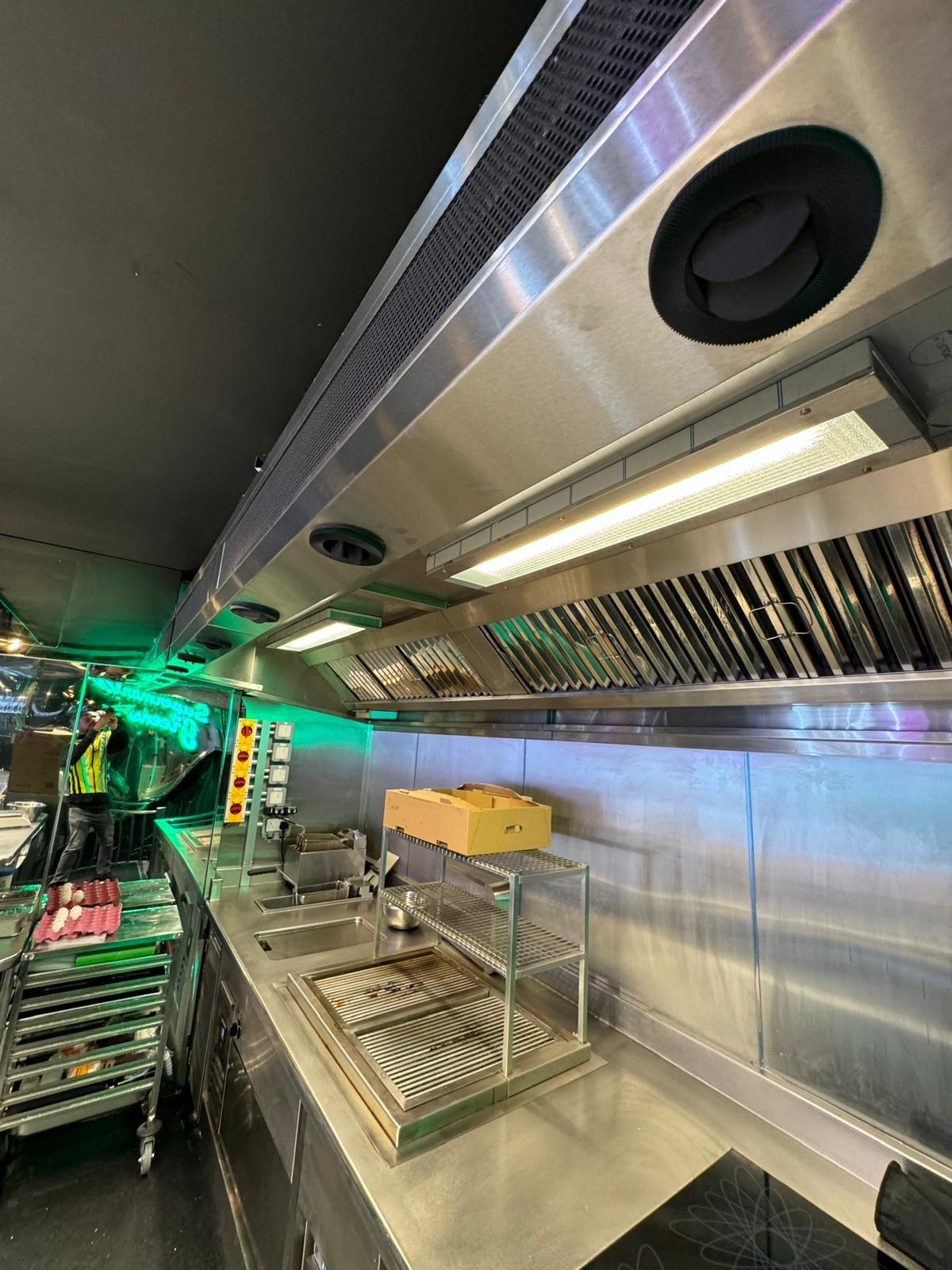
A properly designed and installed commercial kitchen extraction system should include canopy and hood correctly sized for your cooking equipment, with appropriate capture velocities to contain cooking effluents. The ductwork should be manufactured from suitable fire-resistant materials, properly supported, and sealed to prevent grease leakage. Access panels should be positioned throughout for inspection and cleaning, and the fan should be correctly rated for the system’s resistance and required airflow.
For gas kitchens, a properly configured interlock system is essential. Where required, odour control solutions such as carbon filtration or UV treatment should be integrated. And importantly, all work should be documented with appropriate certificates for Building Control, your insurers, and Environmental Health.
The Insurance Angle You Can’t Ignore
Many insurers now require proof of compliant installation and ongoing TR19 maintenance before providing cover for commercial kitchens. If a fire occurs and your system wasn’t installed or maintained properly, your claim could be rejected entirely. We’ve seen businesses face this situation – it’s devastating and entirely avoidable.
Following a professional installation, you should receive comprehensive documentation that you can share with EHOs, landlords, fire officers, and insurers to demonstrate compliance.
Getting It Right From The Start
Whether you’re fitting out a new premises or upgrading an existing system, investing in professional design and installation pays dividends. A system that meets all current regulations from day one avoids costly retrofitting, keeps you compliant with insurance requirements, and ensures smooth inspections from Environmental Health and Fire Safety officers.
At Fan Rescue, we design and install commercial kitchen extraction systems to meet all current UK regulations. Every installation comes with full documentation and certification. If you’re planning a new kitchen or have concerns about your existing system’s compliance, contact us for a site assessment.